Kyoto means “Capital City” and was the capital of Japan for more than 1,000 years. It was named differently, but during the Meiji Restoration the name Kyoto remained and the capital was moved to Tokyo. It is the center for traditional Japanese culture and Buddhism. Emperor Kammu modeled the city after Xian (China), which at that time was the capital of the Tang dynasty. Most of the historical buildings remained intact after WWII; most of them are a World Heritage Site. The Kiyomizu-Dera was nominated for the new 7 wonders of the world. Compared to Tokyo or Osaka, Kyoto is a very calm city. It is one of the largest in Japan. It is the national centre of silk and fine textile; it is famous for its Geisha and Maiko (apprentice) distrcits and having some of the finest Sakes.
I have prepared a two-day guide to help you cover the top attractions. If you wish to make your own, scroll down!
DAY 1
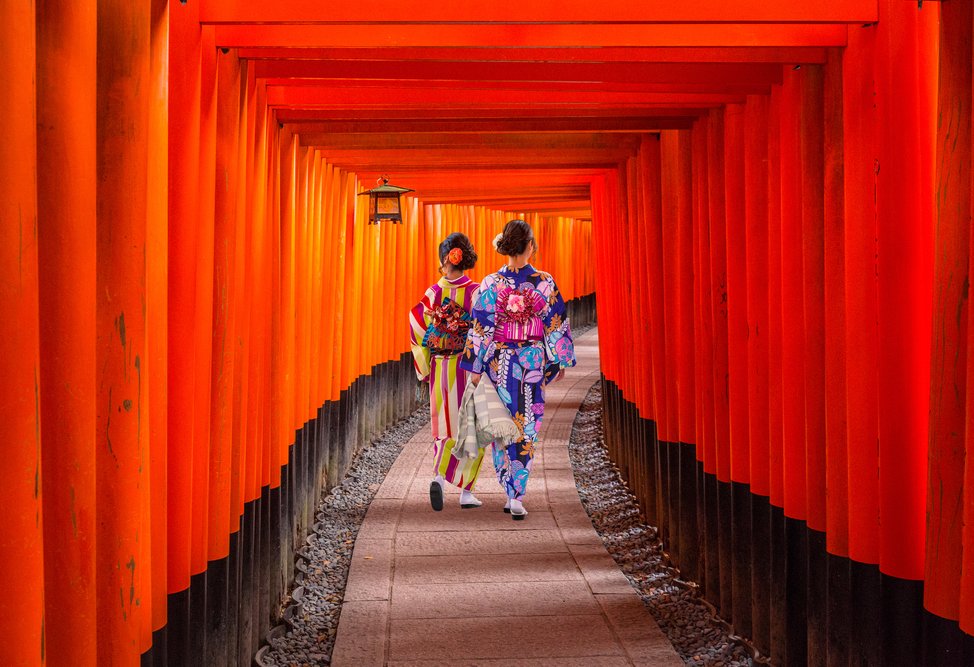
Let’s start our day at Fushimi Inari-taisha. It is the head shrine of Inari and it is located on top of the mountain. The highlight is the rows of torii gates (Senbon torii). These gates mark symbolically the transition from the profane to sacred. Not everybody make it to the top, most people walk a little bit and take pictures with the doors.
On the way to the next stop, there is a hidden Buddhist temple which I find unique, Sanjūsangen-dō. If you have time, make a quick stop. It has 1,001 statues of the goddess Kannon ("Goddess of Mercy”).
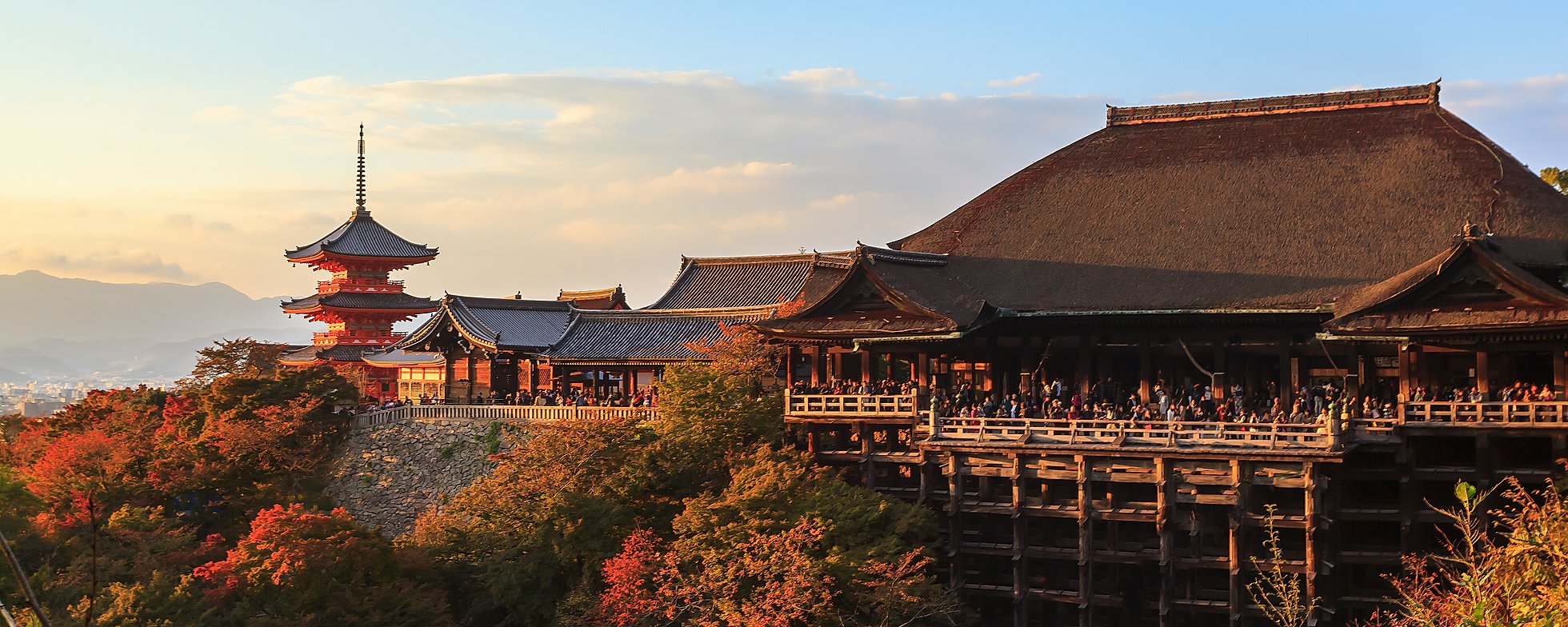
After your visit, you will head to the once nominated for the "20 new wonders of the world", Kiyomizu-Dera. It is an
independent Buddhist temple. The temple is part of the Historic Monuments of Ancient Kyoto UNESCO World Heritage site. It is a must visit!
After your visit you will walk back through the same path. It’s full of shops and Kimono rentals.
From here, we will head to our last stop of the day, the Gion area. It is one of the best Geisha districts; what it makes it magical is the old wooden buildings, teahouses and excellent Japanese restaurants. You can also book a Dinner with Maiko (Geisha apprentice). It is a very touristic attraction, but a lot of people like it; personally I prefer to dine at a regular restaurant, but there is no show involved. If you want the experience, you can go to Gion Hatanaka Ryokan.
DAY 2
After breakfast, we will start our morning at Arashiyama Monkey Park Iwatayama. That’s right Japanese macaque monkeys; you can buy food inside and feed them.
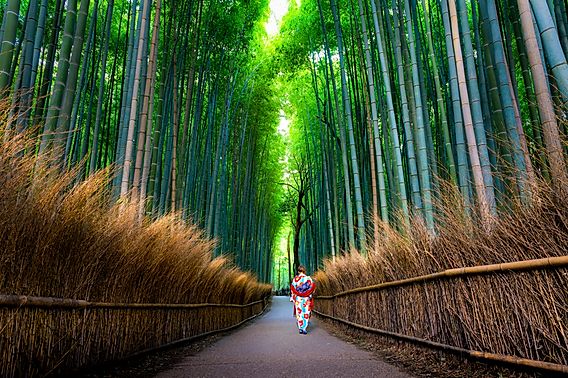
Next stop will be Arashiyama Bamboo Grove. A path full of tall bamboos on each side; it gives you the idea that you are in another planet.
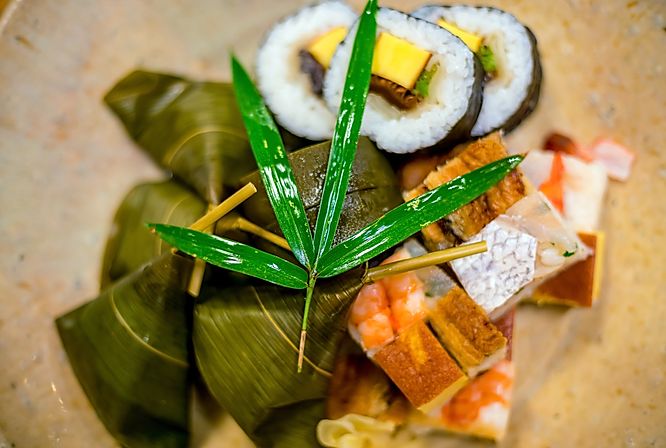
Take a break and go for some lunch! Kyoto is famous for Shojin Ryori (Buddhist cuisine) and Kyoto-style sushi. Buddhist cuisine is vegetarian and it includes a lot of Tofu.
We will head to our last stop of the day, Kinkaku-ji or The Golden Pavilion, it belonged to a powerful statesman; nowadays is a ZenBuddhist temple and a World Heritage Site. Finally, if you still have time, visit To-ji which is a
Buddhist Temple or Gekkeikan Ōkura Sake Museum to learn how is sake made.
Go shopping or visit other tourist attractions on the tab below. There are a lot of good
restaurants close to the Nishiki Market.
Make Your Own
- Kiyomizu-Dera
- Fushimi Inari-taisha
- Kinkaku-ji
- Ginkaku-ji
- Ryoan-ji
- Gion
- Kyoto International Manga Museum
- National Museum of Modern Art Kyoto
- Kyoto Municipal Museum of Art
- Hosomi Museum $
- Tranq Room
- Nijō Castle
- Shimogamo Shrine
- Heian Shrine
- Tō-ji
- Kyoto Imperial Palace
- Sanjūsangen-dō
- Katsura Imperial Villa
- Arashiyama Monkey Park Iwatayama
- Arashiyama Bamboo Grove
Toei Kyoto Studio Park
TV Studio with Samurai shows.
Osaka
One of the best cities to eat. Osaka Castle and Universal Studios.
Nara
It is a UNESCO World Heritage site, explore its temples, shrines and famous deer park.
Kobe
Famous place for its beef.
Hiroshima - Miyajima
Visit the Peace Monument at Hiroshima and Miyajima Island, home to the splendid Itsukishima Shrine.
Suntory Yamazaki Distillery 24 km
Famous world class japanese whisky.
Always take a train!
Nagoya 179 kilometers
It has one of the most beautiful castles in Japan.
Kobe 36 kilometers
Famous for its Kobe beef.
Osaka 56 kilometers
One of the best cities to eat. Osaka Castle and Universal Studios.
Hiroshima 331 kilometers
Visit the Peace Monument at Hiroshima and Miyajima Island, home to the splendid Itsukishima Shrine.
Fukuoka 611 kilometers
Biggest city in the island of Kyushu.
Okayama 177 kilometers
It is known as one of the top three traditional gardens in Japan.
Thanks to the efficient train system in Japan you can get pretty much anywhere in short time. There is no way you will rent a car in Kyoto. If you are planning to visit other cities purchase a JR Rail Pass before leaving your home
country; this pass gives you unlimited access to trains. If you need cash do not take it out from any ATM because they will probably block your card; the best way is to go to the ATMs in the post offices. If you are a Manga
(comic) lover, visit the Kyoto International Manga Museum which has more than 300,000 items. It has more
magazines than actual pieces. Kyoto has a lot of
buildings to visit because it was the capital for a 1000 years; however, I have prepared a two day guide
which will make your Kyoto trip complete. If you like Monkeys, visit Arashiyama Monkey Park; it is a park with a lot of wild monkeys. They are friendly, but like any other monkey be careful with your belongings. If you want to know how Sake is made, go to Gekkeikan Ōkura Sake Museum (They give you some Sake for free). Kyoto is a very beautiful and historical city, but for many people staying longer than two days will be too much.
Most bars are located in or close to Saitocho. Here are some good ones:
Sfera Bar Satonaka, Beer Komachi, Bar K6 (Sake), L'EscaMoteur Bar, Calvador, Sky Lounge Kuu (view), St. James
Club, Jo Social Sake Bar, Atlantis, Finlandia, Nightclubs: World, Metro, Butterfly, and Kitsune Kyoto.
Cafe La Siesta - 8bit Edition (gamers)
If your plan is shopping, check out this stores: Shijo-Dori, Daimaru, Takashimaya, and Koto +.